
WORLD WOLVERINE DAY
March 10th
“Endangered or not, species need champions these days to secure their future. They also need public opinion in their favor. But the public can’t develop a connection with an animal that’s scarcely heard of. And what little people have heard about wolverines is the same old, same old. A blend of prejudice, fantasy, and overblown campfire stories from the boondocks, reeking of musk and testosterone. Out of every 100,000 American citizens, 99,999 haven’t seen a wild wolverine to decide about the animals for themselves. And most never will. Granted, they haven’t seen polar bears or tigers in the wild, either. Yet those carnivores have legions of fans. The difference is that they’re in the news, in magazine stories, in children’s books, and all over televised nature programs.Wolverines rarely register on the public’s radar. Even if you were inspired to pour through scientific journals, you couldn’t come up with much of a sense of wolverine’s daily lives. No one has observed them that closely and continuously in the wild,for the simple reason that no human can move that far that constantly. In fact,I can’t think of any animal that could, not in the mountains. Oh, maybe a snow leopard, which is why its ways remain equally mysterious to us.”
Why Focus on the Wolverine
Although the wolverine is only found in the Northern Hemisphere (across North America and Eurasia) and its populations are regionally located, its ecological needs and the threats it faces are globally relevant to the conservation of many species of carnivores. Thus, the wolverine is worth focusing because of its:
- ecological role as a meso-carnivore, scavenger, and keystone species specific to alpine and boreal habitats;
- climate sensitivity, given its dependence on persistent spring snow for denning;
- transboundary range, which brings together researchers, NGO advocates and management agencies from across North America, Europe, and Asia;
- need for better data and management resources, given the challenges inherent in researching, monitoring and managing the species;
- symbolism, as a species that needs wilderness, habitat connectivity, and ecological resilience.
Interesting Wolverine Facts
1) They’re Built for the Wildest Places on Earth:
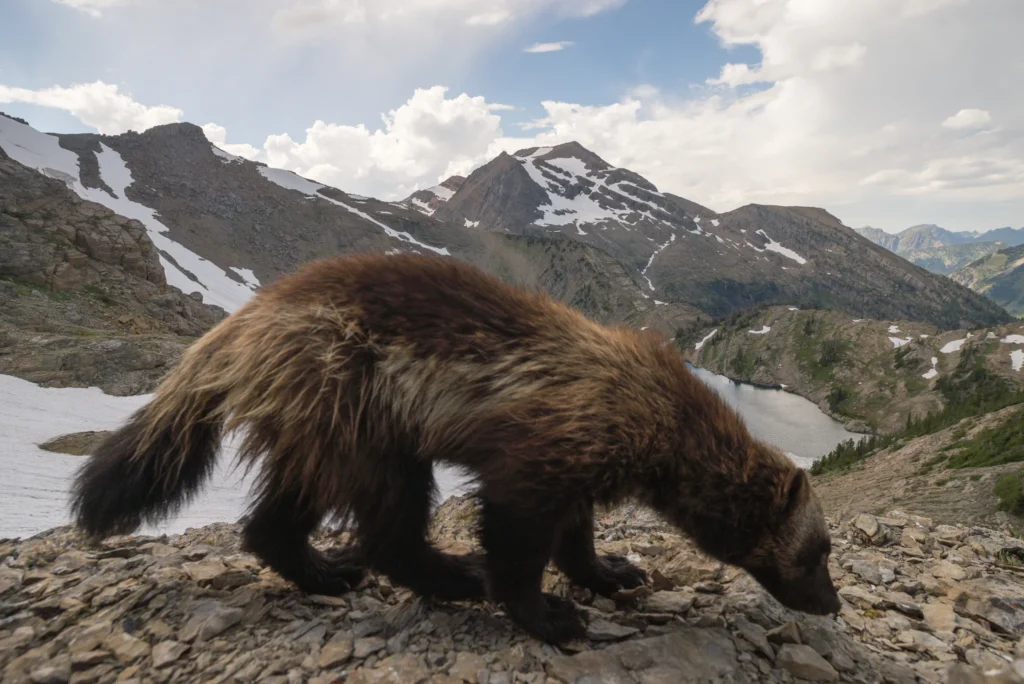
The wolverine lives in some of the most remote, rugged landscapes on Earth—alpine tundra and boreal forests across North America and Eurasia. In mountainous regions, the animal lives at elevations of 4,500 to 8,500 feet (between 1,400 and 2,600 meters) or higher. It thrives where few large carnivores can survive..
2) Pound-for-Pound Powerhouse
Though only 20–40 pounds (8–18 kg), wolverines have been documented driving off much larger predators like wolves and mountain lions from carcasses. They are renowned for their strength, capable of hauling, dragging, or carrying food items (like deer, elk, caribou, reindeer or sheep) that can weigh 10 to over 15 times their own body weight.
3) Long-Distance Wanderers
Wolverines have enormous home ranges—males typically occupy 200–600+ sq miles (500–1,500+ km²) and females occupy 100–300+ sq miles (100–700+ km²). These wide-ranging carnivores can travel more than 15 miles (24 km) a day. Some individuals have dispersed hundreds of miles, crossing highways, rivers, and mountain ranges.
4) A Nose to Live By
The wolverine’s sense of smell is exceptional, and crucial to its survival. The wolverine relies heavily on scent to locate carrion, prey, mates, and territorial boundaries across vast alpine and boreal habitats where visual cues are limited for much of the year. In fact, researchers in the U.S. Rocky Mountains and Scandinavia report wolverines excavating carcasses from well over 6 feet (≈2 meters) of consolidated snow.
5) Masters of the Freezer Cache
Wolverines specialize in scavenging and can crush frozen bones with their powerful jaws. Wolverines often cache meat in snowbanks or boulder fields, creating natural “refrigerators” that preserve food for months.
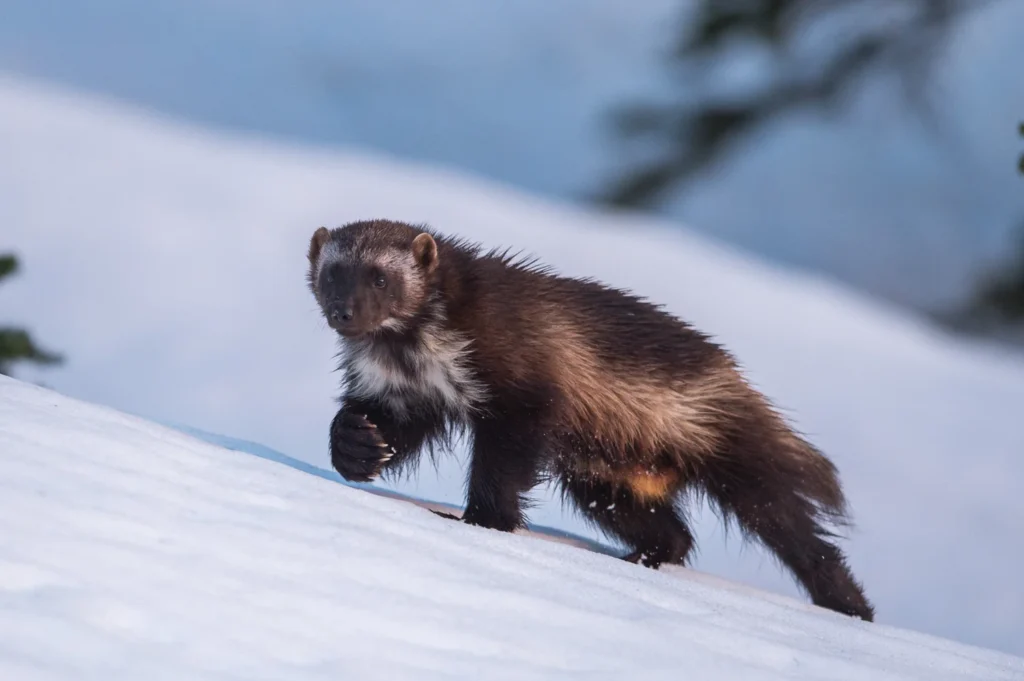
World Wolverine Day has been established by the Carnivore Conservation Compendium.
For more information about World Wolverine Day,
contact the Carnivore Conservation Compendium at.
+01-831-400-8270 (cell/text).